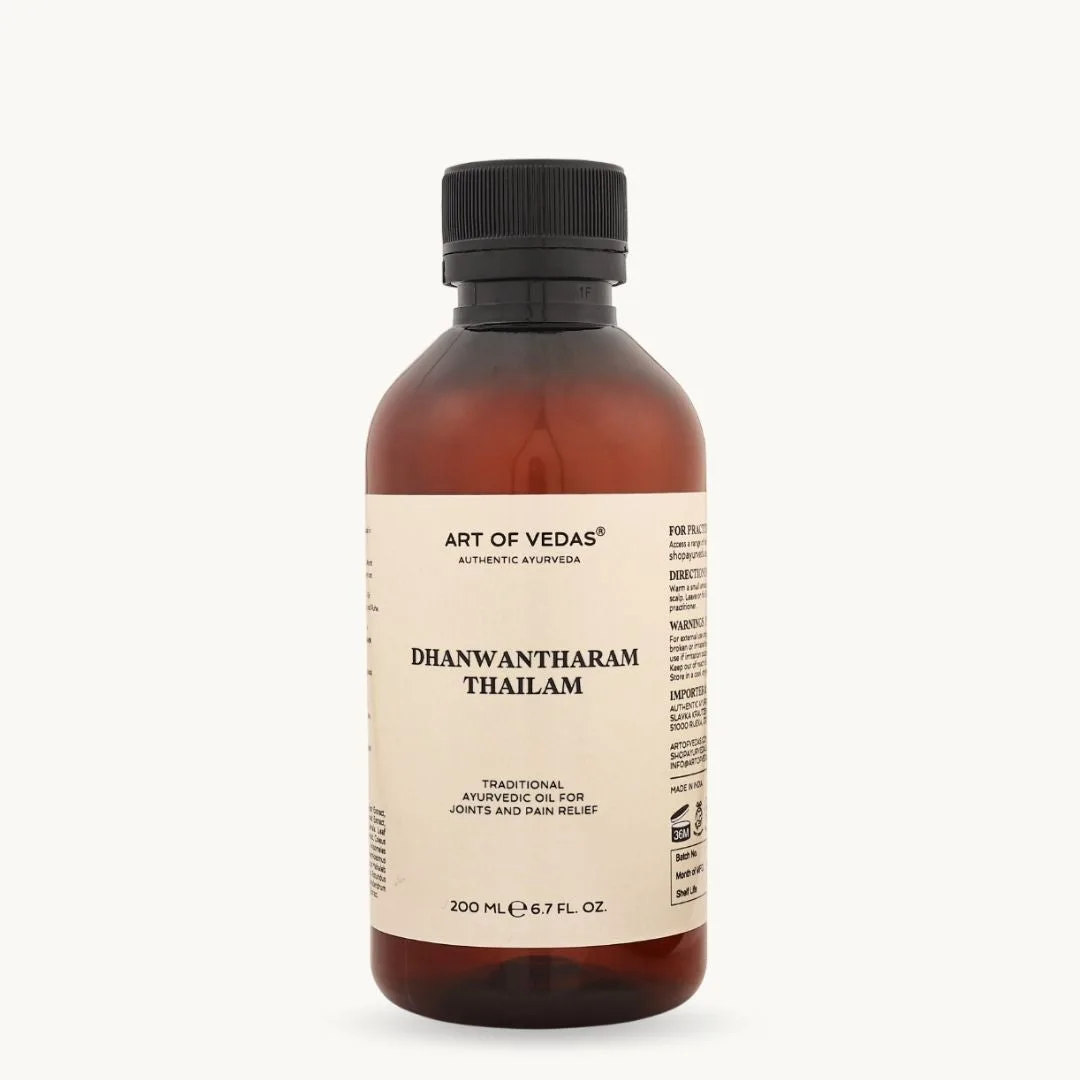
Conviene detenerse en los ingredientes del Dhanwantharam Thailam, porque explican por qué este aceite clásico se ha valorado durante tanto tiempo. En su núcleo se encuentran dos elementos: Bala, una sola planta muy apreciada, y el Dashamoola, un conjunto de diez raíces. En torno a ellos, la receta tradicional dispone una base de aceite de sésamo y un lento proceso de cocción con leche y decocción. Estas páginas recorren cada componente de la lista de ingredientes del Dhanwantharam Thailam tal como lo consignan los textos clásicos, sin atribuir efecto terapéutico alguno a ninguna de las plantas.
Una fórmula recogida en los textos clásicos
El Dhanwantharam Thailam pertenece a la tradición clásica y aparece consignado en los tratados ayurvédicos de referencia, señaladamente en el Ashtanga Hridaya. Lleva el nombre de Dhanvantari, la figura del médico en la tradición clásica, lo que da idea de la estima que siempre ha merecido. La elaboración tradicional sigue el método Sneha Paka: las plantas se cuecen en el aceite en fases sucesivas, de modo que sus cualidades pasen al Thailam terminado. De ahí que el resultado sea una fórmula por capas y no una simple infusión.
Bala, la planta central
Bala (Sida cordifolia) es la que imprime carácter al aceite. Su nombre significa fuerza y el Ayurveda la incluye entre las plantas Balya, aquellas que la tradición asocia con la firmeza y el sostén; se cuenta además entre los vegetales reconocidos por apaciguar Vata. En el Dhanwantharam Thailam se emplea con generosidad, casi siempre como decocción de la planta entera, de manera que constituye el armazón de la preparación. El aceite terminado figura en nuestra gama como Dhanwantharam Thailam.
El Dashamoola, las diez raíces
El Dashamoola, literalmente las diez raíces, es el segundo pilar de la fórmula. Reúne cinco raíces mayores, Bilva, Agnimantha, Shyonaka, Gambhari y Patala, junto a cinco menores, Shalaparni, Prishnaparni, Brihati, Kantakari y Gokshura. Como conjunto, las diez raíces se describen tradicionalmente como asentadoras y apaciguadoras de Vata, y de ahí su presencia constante en los aceites de carácter cálido. Las tratamos con detalle en nuestra guía del Dashamoola, y la mezcla de raíces se ofrece también por separado como Dashamoola en polvo para quien desee explorarla.
La base de sésamo y la decocción con leche
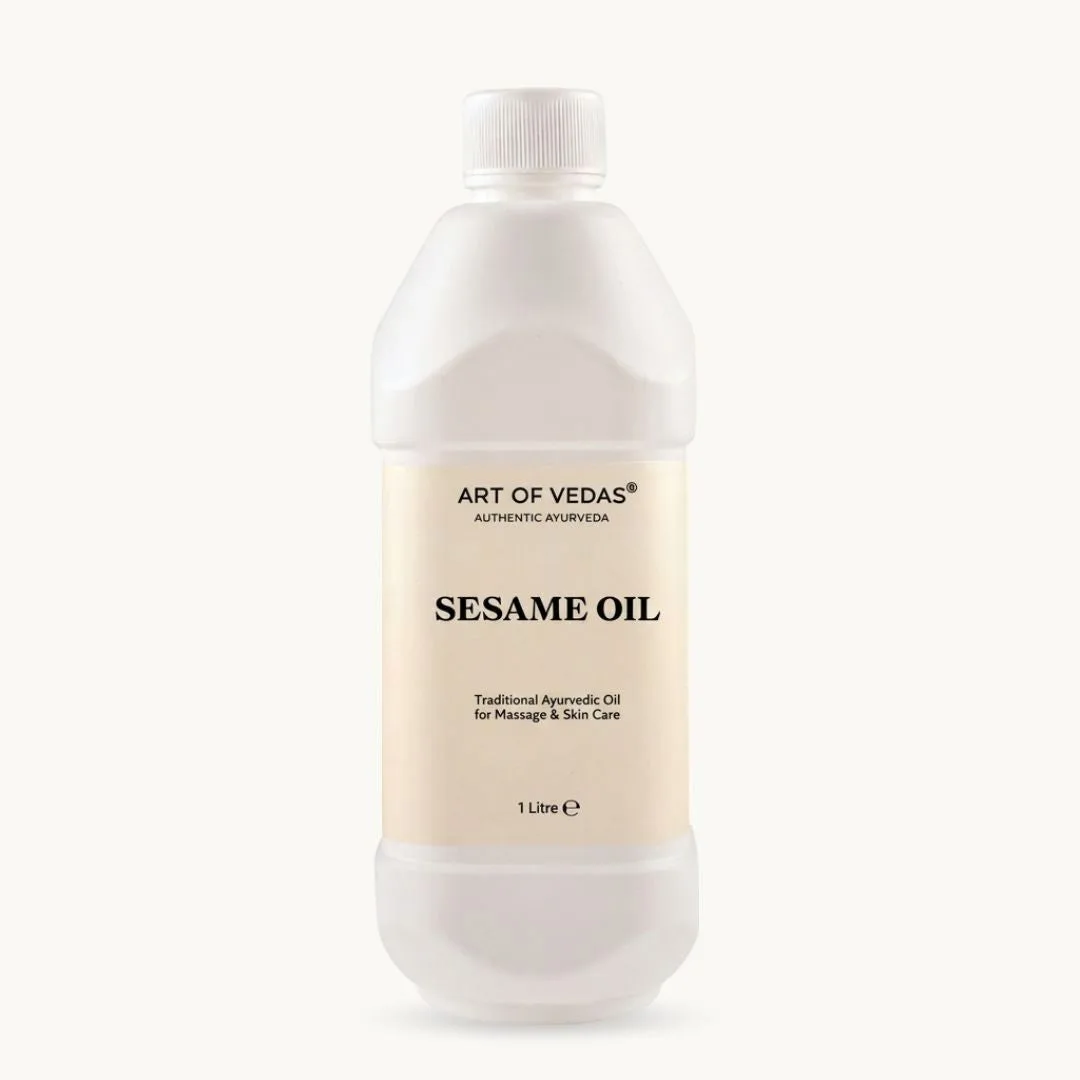
El vehículo es el aceite de sésamo, llamado Tila en Ayurveda y considerado la base clásica que apacigua Vata. En él se cuecen las plantas junto con leche y una decocción acuosa de los vegetales, proceso lento que fija las cualidades vegetales en el aceite. El aceite de sésamo sin más es esa misma base, la que sirve para alargar el Thailam terminado en el masaje diario. Esta reunión de sésamo, leche y decocción es lo que distingue a un verdadero Thailam medicado de un mero aceite perfumado.
Qué aporta cada ingrediente clásico
- Bala (Sida cordifolia): la planta Balya central, ligada por tradición a la fuerza y la firmeza.
- Dashamoola (diez raíces): un conjunto de raíces asentadoras que apaciguan Vata.
- Aceite de sésamo (Tila): el vehículo clásico, cálido y apaciguador de Vata.
- Leche y decocción vegetal: el medio tradicional que traslada las cualidades de las plantas al aceite.
- Cocción lenta en Sneha Paka: el método por fases que da hondura al aceite.
El aceite corriente y la versión 101 Avartana
Los mismos ingredientes de base reaparecen en la versión 101 Avartana, más concentrada, en la que la preparación se repite muchísimas veces. Si ha visto el Dhanwantharam vendido en gotas o como edición 101, nuestra guía del Dhanwantharam 101 Avartana explica qué significa ese procesado repetido. Sobre el lugar que ocupa el aceite dentro de una rutina, véase nuestra guía completa del Dhanwantharam Thailam.
Preguntas frecuentes
¿Cuáles son los ingredientes principales del Dhanwantharam Thailam?
La fórmula se levanta sobre Bala (Sida cordifolia) y el Dashamoola, el conjunto de diez raíces, cocidos en una base de aceite de sésamo con leche y una decocción vegetal. La receta clásica añade numerosas plantas de acompañamiento, pero Bala y Dashamoola siguen siendo los dos pilares. El aceite terminado es una preparación por capas, no la infusión de una sola planta.
¿Qué texto clásico describe el Dhanwantharam Thailam?
Aparece en los tratados ayurvédicos de referencia de la tradición clásica, señaladamente en el Ashtanga Hridaya, y sigue siendo un pilar de la tradición aceitera. La fórmula toma su nombre de Dhanvantari, figura del médico en el Ayurveda clásico. Cada elaborador puede seguir recetas tradicionales ligeramente distintas, pero el núcleo de Bala y Dashamoola no varía.
¿Qué es Bala dentro de la fórmula?
Bala es la planta Sida cordifolia, cuyo nombre significa fuerza. Pertenece al grupo de las Balya, plantas que la tradición asocia con la firmeza y el sostén, y está reconocida como apaciguadora de Vata. En el Dhanwantharam Thailam se emplea con generosidad, por lo común como decocción de la planta entera, y de ahí que se la tenga por el corazón de la preparación.
¿Por qué se utiliza leche en la elaboración?
La leche forma parte del proceso tradicional Sneha Paka, en el que aceite, leche y una decocción acuosa de las plantas se cuecen juntos por fases. Actúa como uno de los medios que trasladan las cualidades vegetales al aceite. Se trata de un paso de fabricación propio del método clásico, no de algo que se perciba al gusto o al tacto en el aceite terminado.
¿La lista de ingredientes es la misma en la versión 101?
Los ingredientes de base son los mismos. Lo que cambia en la versión 101 Avartana es el procesado: la preparación se repite muchísimas veces, lo que concentra el aceite y explica que suela venderse en pequeños frascos con cuentagotas. Nuestra guía dedicada al 101 detalla por entero la diferencia.
Uso externo exclusivamente. No sustituye al consejo médico profesional.