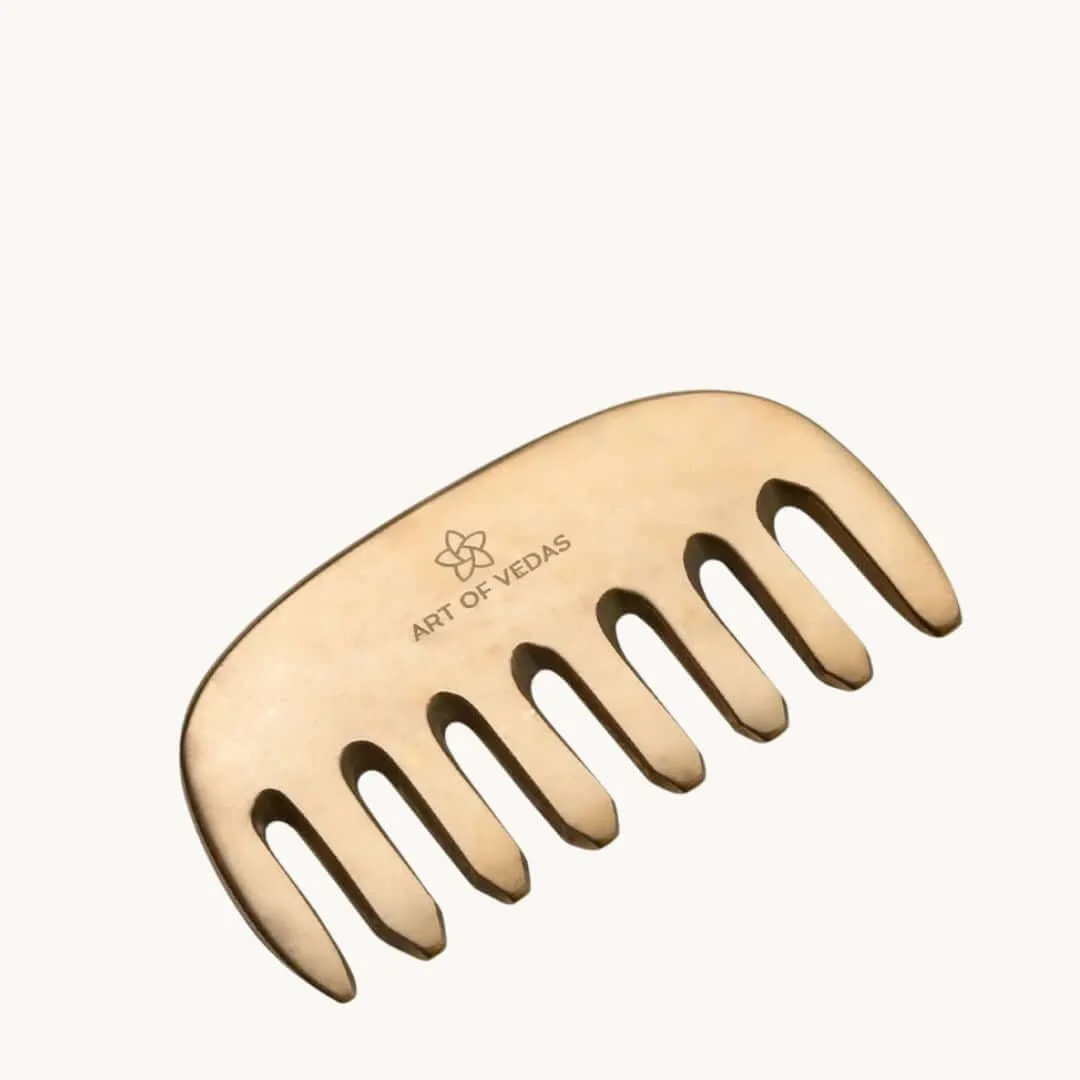
Learning how to use a Kansa comb daily takes only a couple of minutes, yet it can become one of the calmer moments of the morning. A Kansa comb is a bronze comb used to smooth the hair and gently stroke the scalp, part of the Ayurvedic daily routine known as Dinacharya. This short guide walks through a simple two minute sequence, explains when to comb wet or dry hair, and covers how to keep the comb clean.
What a Kansa comb does
A Kansa comb is made of Kansa, the traditional bronze alloy of copper and tin. Its smooth metal teeth move through the hair without the static that a plastic comb creates, and they carry a pleasant, cooling weight across the scalp. Used slowly and daily, the comb helps distribute the natural oils along the hair, keeps the lengths tidy and gives the scalp a few moments of gentle attention. It is a small ritual rather than a chore, and it rewards an unhurried hand.
The two minute morning sequence
Sit or stand somewhere calm, and give the ritual your full, brief attention.
- Start by combing gently from the mid lengths down to the ends to ease out any tangles, supporting the hair with your free hand.
- Once the ends move freely, comb in longer strokes from the roots to the tips, following the natural fall of the hair.
- Draw the comb slowly across the scalp from the front hairline to the nape, letting the teeth stroke the skin lightly.
- Work section by section so the whole scalp receives a few even passes.
- Finish with a few smoothing strokes down the full length to leave the hair settled and neat.
That is the whole sequence. Two minutes of slow combing is more valuable than a rushed tug, and it is far kinder to the hair.
Wet or dry hair?
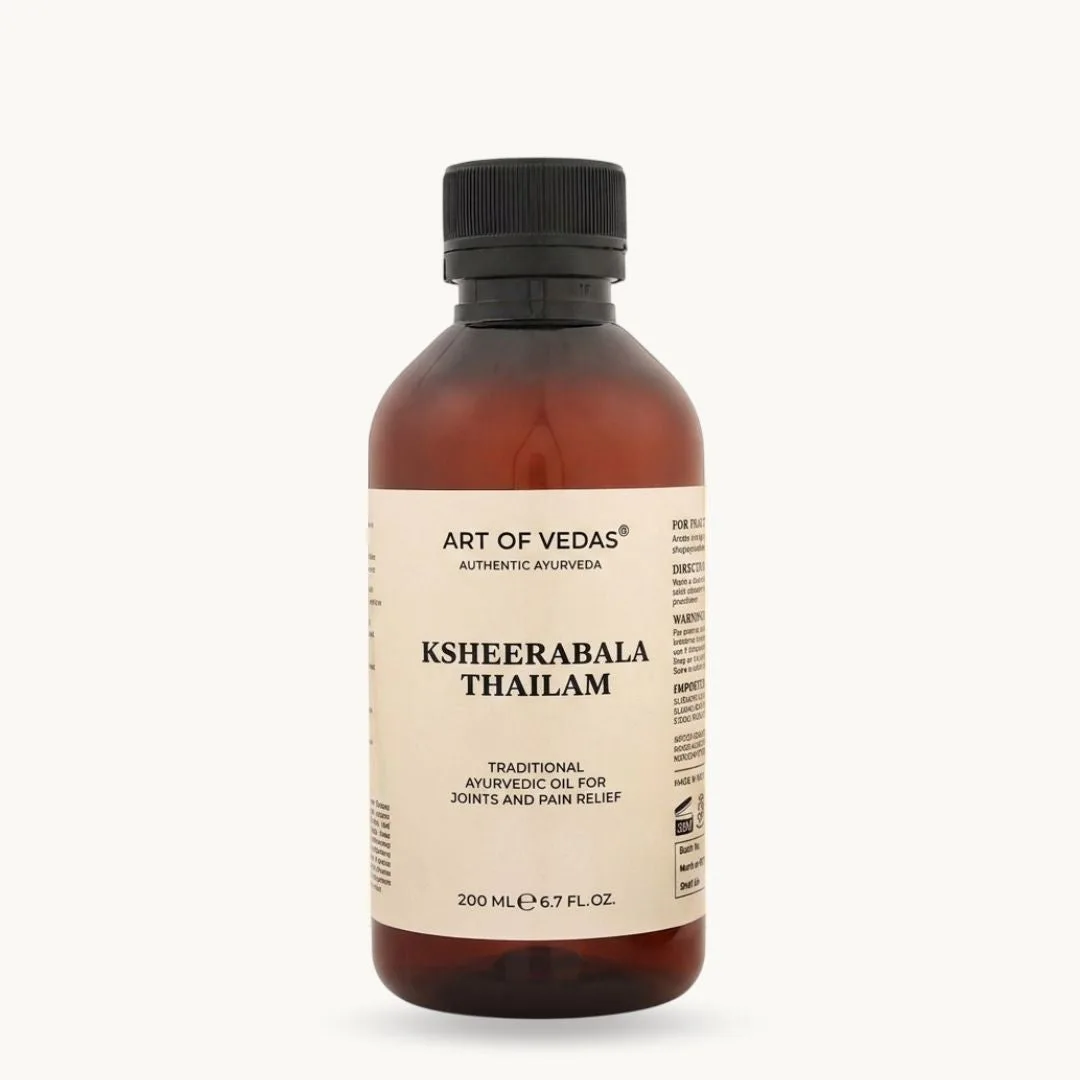
As a rule, comb dry or almost dry hair with the Kansa comb. Hair is at its most fragile when soaking wet, so if you need to detangle after washing, let it dry most of the way first, or ease out tangles gently with your fingers before reaching for the comb. For daily grooming on dry hair, the comb glides best and gives the smoothest result. If you like to comb an oil through the hair, a light warm oil such as Ksheerabala Thailam spreads evenly along the lengths and suits an evening session.
On craft and care, the Kansa comb is finished so its bronze teeth are rounded and smooth, gliding through the hair without catching. Bronze is a living surface and will take on a natural patina over time, which does not affect how the comb works. Keep it simple: after use, remove any loose hair from between the teeth, wipe the comb, and keep it dry rather than leaving it in a damp bathroom. Stored well, a good bronze comb lasts for years.
Building the habit
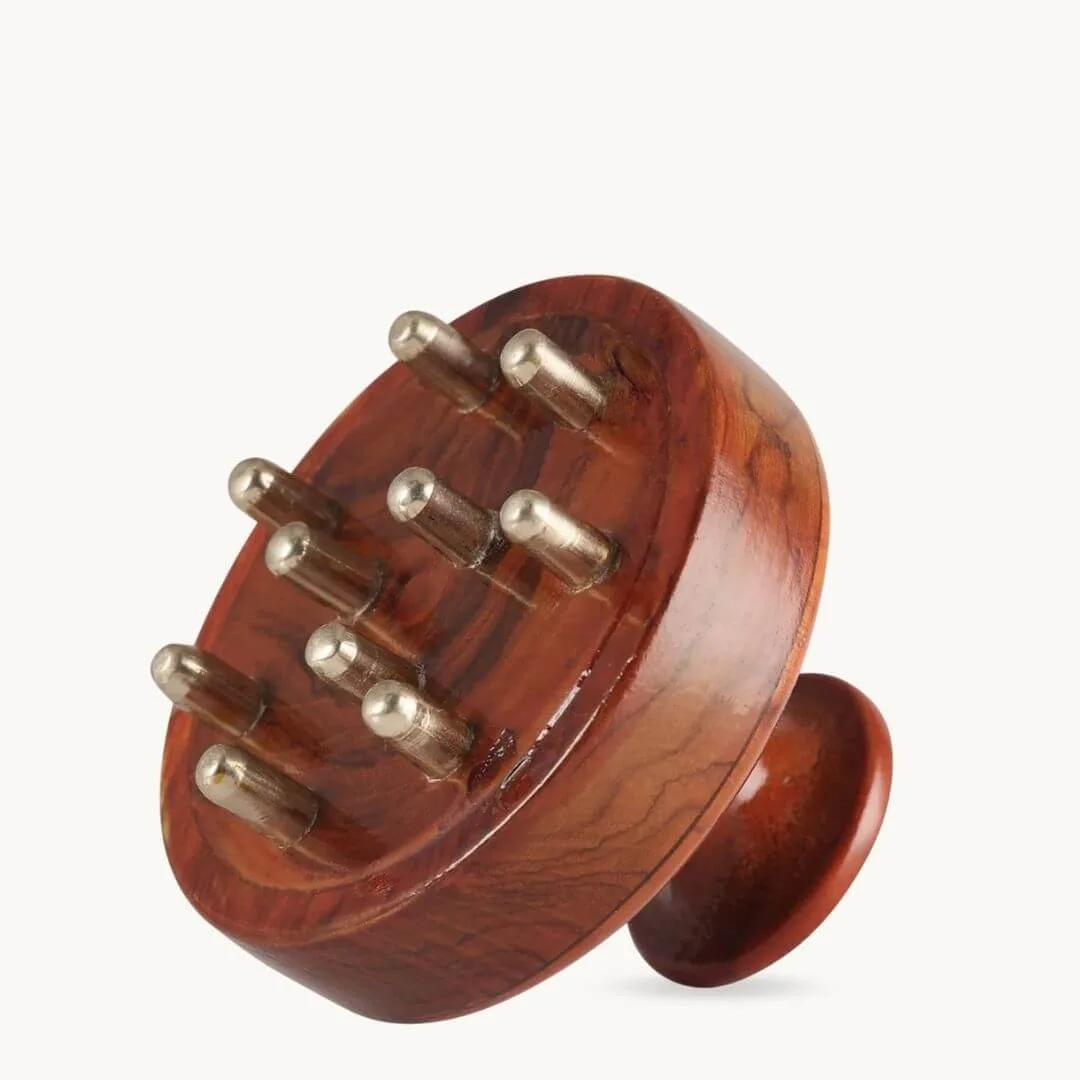
Daily combing sits naturally alongside the rest of a hair ritual. For the fuller practice, our Kansa comb hair and scalp guide covers scalp work in more depth, while the Kansa scalp massager guide introduces a companion tool for a deeper wind down. If you want to pair combing with an oil, our note on Ksheerabala Thailam for the hair and head explains how a warm oil fits into the routine.
Frequently Asked Questions
How often should I use a Kansa comb?
Once or twice daily is ideal, most often in the morning to tidy the hair and again in the evening if you wish to wind down.
Should I use a Kansa comb on wet hair?
It is best on dry or almost dry hair, since wet hair is more fragile. Ease out post wash tangles with your fingers first, then comb once the hair has dried.
Can I comb oil through with it?
Yes. The bronze teeth spread a light warm oil evenly along the lengths, which suits an evening ritual.
How do I clean the comb?
Remove loose hair from between the teeth, wipe the comb, and keep it dry. A natural patina on the bronze is normal.
Is a Kansa comb suitable for all hair types?
Most hair types suit it when combed slowly and gently. For very fine hair, use an especially light hand.
For external use only. Not a substitute for professional medical advice.