


Where to Buy Authentic Ayurvedic Oils, Kansa Tools and Classical Preparations in Germany and Europe
The European Ayurvedic market has grown considerably over the past decade, and with it the number of products that carry Ayurvedic language without much connection to Ayurvedic tradition. If you are looking for genuine classical preparations — Thailams made through the traditional Sneha Paka process, Kansa tools made from the correct alloy, Nasya oils prepared for actual nasal use — this matters. The word "Ayurvedic" on a label tells you very little about what is inside.
This guide explains what authentic means in practical terms, what to look for when choosing a supplier, and what to expect from the range of genuine classical preparations available in Europe.
Why Sourcing Matters More Than the Label
In India, Ayurvedic medicines and preparations are regulated under AYUSH (the Ministry of Ayurveda, Yoga & Naturopathy, Unani, Siddha and Homoeopathy), with GMP (Good Manufacturing Practice) standards that govern the preparation of classical formulas. Manufacturers producing genuine classical Tailams, Churnams, Arishtams and other preparations according to these standards follow defined processes: classical formulas from specific texts, defined herb ratios, traditional cooking methods, and production in licensed facilities.
When those same products enter the European market, they are governed by EU cosmetic or food supplement regulations — not by the AYUSH classification system. This creates a gap: a product can be sold as an "Ayurvedic oil" in Europe without any obligation to follow classical preparation methods. The result is a broad spectrum of quality, from carefully prepared classical Tailams to oils that are, in practice, scented carrier oils with Ayurvedic marketing.
Understanding this gap is the starting point for buying well.
What Genuine Classical Tailams Look Like
A classical Ayurvedic Tailam — the category of medicated oil that includes preparations like Dhanwantharam, Mahanarayana, and Ksheerabala — is prepared through a process called Sneha Paka: a multi-stage herbal extraction into an oil base, combining a water-based herbal decoction (Kashayam), a herbal paste (Kalka), and the base oil itself, cooked together at a controlled temperature for an extended period. The full explanation of this process is in the guide to what Thailam is and how it is made.
When you are looking at Tailams from a supplier, the following are indicators of genuine classical preparation:
Named classical formula. A genuine Tailam has a specific name drawn from a classical text — Dhanwantharam, Mahanarayana, Ksheerabala, Anu Tailam, Kumkumadi — and that name should be traceable to a classical Ayurvedic text such as the Ashtanga Hridayam, Charaka Samhita, or Sahasrayogam. If the product is called something generic like "Ayurvedic Massage Oil" or "Herbal Body Oil" with no classical name, it is likely not a classical Tailam.
Sesame oil as the primary base. Most classical Vatahara (Vata-balancing) Tailams are sesame-based. Sesame oil (Tila Taila) is the classical therapeutic base for most external preparations. Some formulas are milk-processed (Ksheera Tailams) or use coconut in combination — but the base oil should be named and appropriate to the formula.
Ingredient transparency. A supplier committed to authenticity will list the herbs in each preparation, ideally with their Sanskrit and botanical names. Classical Tailams contain multiple herbs; a genuine Dhanwantharam, for example, includes Bala root, Dashamoola herbs, and numerous additional components.
GMP-certified manufacturing. Look for production in a GMP-certified Ayurvedic facility in India, ideally licensed under AYUSH standards. This does not guarantee every detail of classical preparation, but it does indicate a baseline of manufacturing quality and ingredient control.
No synthetic fragrances or mineral oils. These have no place in a classical Tailam preparation and indicate a product made primarily for cosmetic purposes.
For a more detailed breakdown of what to look for — including a guide to reading Ayurvedic product labels and understanding EU compliance — see how to identify genuine Ayurvedic products.
Buying Ayurvedic Massage Oils in Germany and Europe
Germany is one of the strongest markets for Ayurvedic products in Europe, with a well-established community of practitioners, yoga studios, and Ayurvedic clinics. This means both that good classical preparations are more accessible here than in many other European countries, and that the market also contains a significant volume of wellness-positioned products that use Ayurvedic terminology loosely.
When buying Ayurvedic massage oils in Germany, the most important question is whether the oil you are choosing is a classical preparation or a formulated cosmetic. Both can be high quality in their own category, but they serve different purposes.
For classical Abhyanga — the traditional Ayurvedic full-body self-massage practice — a genuine Vatahara Tailam prepared through Sneha Paka is what classical texts prescribe. Dhanwantharam Tailam is among the most widely referenced oils for daily Abhyanga, particularly for Vata constitutions. Mahanarayana Tailam is used when deeper warming and more potent Vata-balancing is needed — during cold seasons, periods of physical recovery, or when Vata is more pronounced. The guide to warming Ayurvedic massage oils covers the full selection logic.
For specific local application — joints, muscles, or a particular area of the body — the classical selection narrows further. Ksheerabala Tailam, for example, is a milk-processed preparation with a classical affinity for musculoskeletal Vata conditions, used differently from a general Abhyanga oil.
For Ayurvedic practitioners working in a clinical or Panchakarma context, the requirements are different again: bulk quantities, consistent quality, and in some cases specific preparations suited to professional treatments. Art of Vedas supplies a dedicated range of professional Ayurvedic oils for practitioners and clinics across Europe.
Buying Kansa Tools in Europe
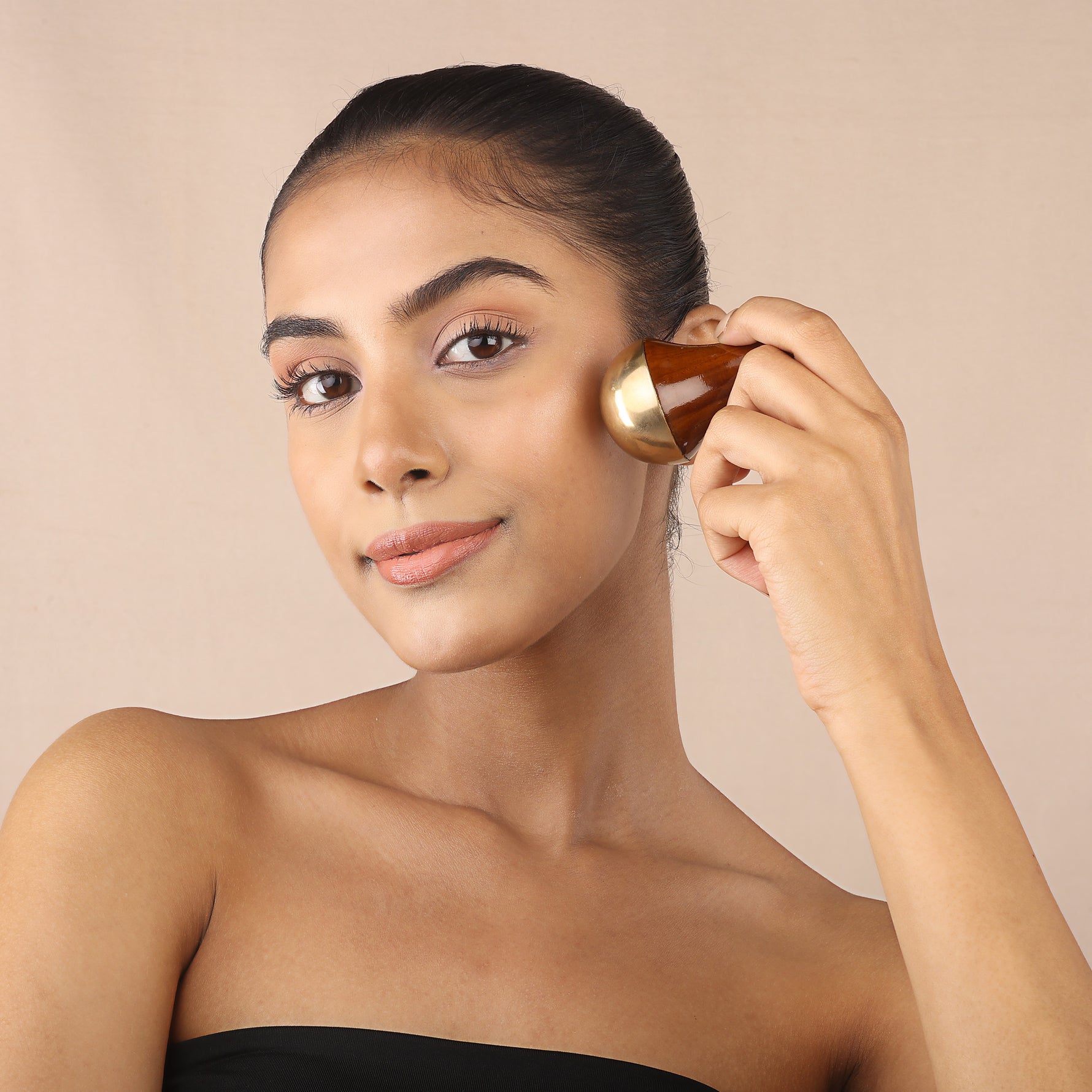
Kansa — the classical Ayurvedic alloy of copper, tin, and zinc — has been used in Ayurvedic practice for centuries as the material for ritual tools, eating vessels, and therapeutic massage instruments. The Kansa wand used in facial massage and the Kansa Abhyanga wand used in body massage are contemporary applications of a classical material, rooted in traditional Ayurvedic understanding of the alloy's properties.
What makes a Kansa tool genuine is primarily the alloy itself. The composition of Kansa — the ratio of copper to tin, and the purity of the metals — directly affects how the tool feels on the skin and how it interacts with the body's surface. Tools sold as "Kansa" but made from a different metal or a simplified alloy are not the same instrument.
When buying Kansa tools in Europe, look for:
Clear alloy specification. A genuine Kansa supplier will state the composition of the alloy. The traditional proportion is approximately 78–80% copper, with tin making up most of the remainder and small amounts of zinc. Tools made from aluminium, brass, or "copper-coated" metals are not Kansa.
Handcrafted finish. Traditional Kansa tools are hand-cast and finished. The characteristic quality of Kansa — its resonance when tapped, the way it warms to body temperature during use — comes partly from the density and finish of the alloy, which machine-produced tools do not replicate.
Appropriate weight and balance. A well-made Kansa wand has a specific balance in the hand that supports the gliding motion used in facial and body massage. Tools that feel very light or very roughly finished are unlikely to be made from the correct alloy.
The complete guide to Kansa tools — what they are, what they do, and how to choose covers the full range of tools and their classical applications.
What to Expect When Ordering Online from Germany or the EU
Ordering Ayurvedic products from within the EU generally means products have passed EU import requirements — cosmetics must meet EU Cosmetics Regulation (EC) 1223/2009, supplements must meet EU food supplement regulations, and any product making health claims must meet EFSA standards. A supplier operating within the EU and shipping to EU customers is obligated to comply with these frameworks.
This EU compliance does not guarantee classical authenticity — but it does mean that products from a credible EU-based Ayurvedic supplier have met a baseline of safety and ingredient transparency. EU cosmetic products must list all ingredients by INCI name, which gives you a way to verify what you are actually buying.
Key practical points when ordering:
Shipping within the EU is straightforward for cosmetic oils and tools. No special requirements apply for standard Tailams classified as cosmetics.
Supplements and internal preparations (Arishtams, Kashayams, Churnams, capsules) are regulated differently — as food supplements — and should carry the appropriate labelling. Art of Vedas supplies these through its dedicated supplement range with full EU-compliant labelling.
Customer support. A supplier committed to genuine Ayurvedic products will be able to answer questions about preparation methods, formula sources, and ingredient origins. If a supplier cannot tell you which classical text a formula comes from, that is informative.
Art of Vedas: Classical Ayurvedic Preparations for Europe
Art of Vedas was established to bring genuine classical Ayurvedic preparations — Tailams prepared through traditional Sneha Paka, authentic Kansa tools made from the correct alloy, classical Nasya preparations, Churnams and supplements following traditional formulas — to the European market with full EU compliance.
Every product in the Art of Vedas range is sourced with classical authenticity as the primary standard. The Tailams come from GMP-certified Ayurvedic manufacturers in India following traditional preparation methods. The Kansa tools are handcrafted from the correct alloy. The formulas are traceable to classical texts.
For consumers: the full range of Tailams, Kansa tools, Nasya oils, skincare preparations, and supplements is available at artofvedas.com.
For practitioners and clinics: wholesale and professional pricing is available through Shop Ayurveda EU — the dedicated B2B platform for Ayurvedic practitioners, Panchakarma centres, spas, and yoga studios across Europe.
If you are navigating which preparation is right for your constitution and circumstances, an Ayurvedic consultation with one of our AYUSH-certified Ayurvedic doctors provides a full classical assessment and specific guidance.
A Note on the European Ayurvedic Market
Euroved, Maharishi Ayurveda Europe, and Satnam are among the longer-established Ayurvedic suppliers in the German-speaking market. Quality and approach differ across these suppliers, and a well-informed buyer comparing options should apply the same criteria to all: classical formula traceability, transparent ingredient sourcing, GMP manufacturing, and EU compliance. The Ayurvedic tradition is broad and genuinely valuable — the goal of this guide is to help you navigate it with clarity.
This guide is for informational and educational purposes. Ayurvedic preparations described here are not medicines and are not intended to diagnose, treat, cure or prevent any disease. For personal guidance appropriate to your constitution, consult a qualified AYUSH-certified Ayurvedic doctor.


