


Kansa Wand Benefits: The Classical Ayurvedic Bronze Massage Tool
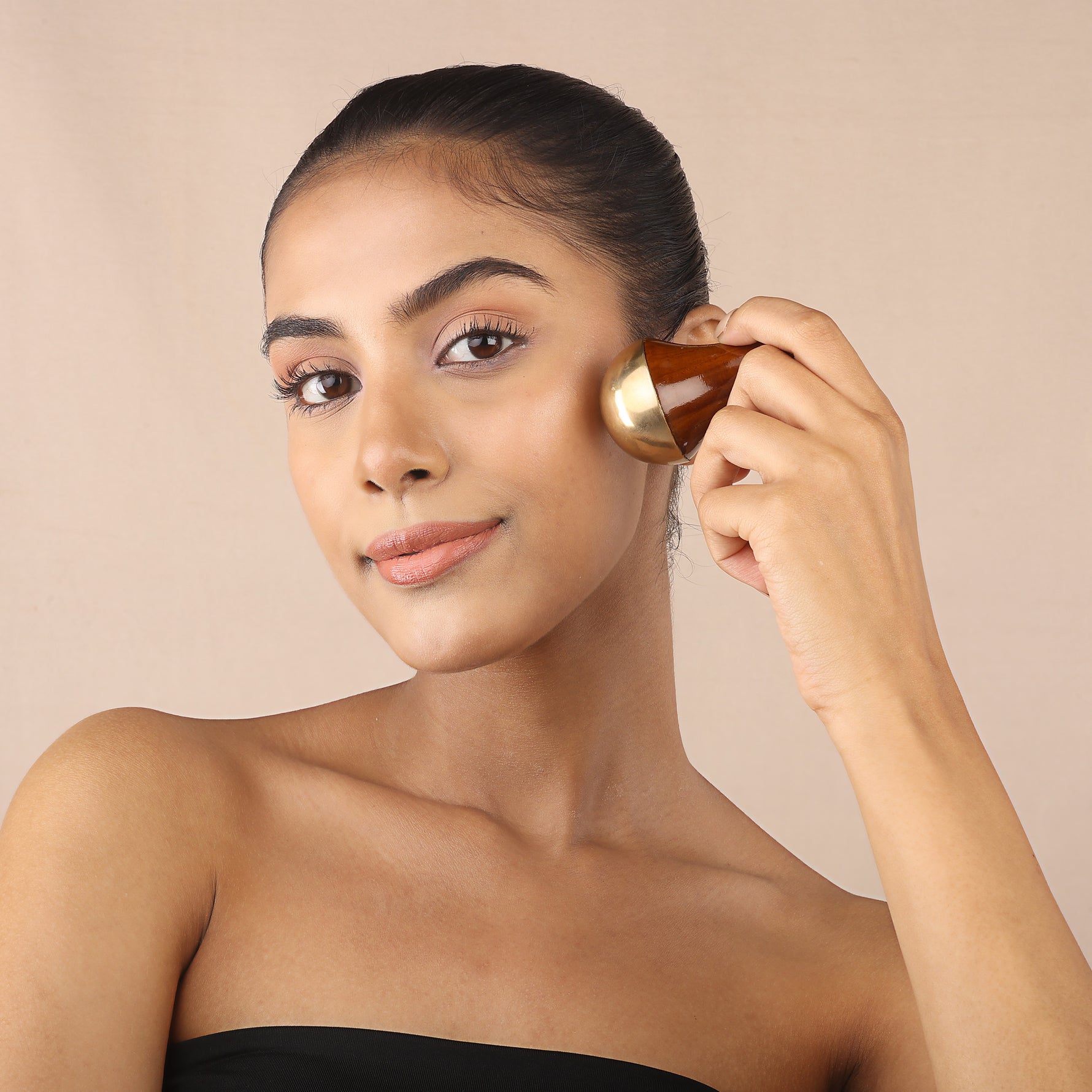
Among all the tools in the Ayurvedic ritual toolkit, Kansa has a particular distinction: it is both ancient and, in modern European wellness, almost entirely new. The Kansa wand — a massage tool cast in the traditional Kamsya bronze alloy — has been used in Ayurvedic facial and body massage practice for centuries, referenced in the classical texts as part of the broader tradition of Mardana (pressing, kneading massage). Yet it arrived in mainstream European awareness only within the last decade. This guide covers what Kansa actually is, what the classical texts say about it, how the different Kansa tools at Art of Vedas are used and what the practice involves for those beginning a Kansa ritual.
The full range of Kansa tools from Art of Vedas is available in the Kansa Rituals collection. For face-specific tools, the Kansa Face Massage Tools collection and the Face and Head Rituals collection provide the complete offering.
What Is Kansa? The Classical Metal Alloy
Kansa — also written Kamsya — is the traditional sacred bronze alloy that has been used in India for thousands of years for ceremonial vessels, temple bells, musical instruments and therapeutic tools. The alloy consists primarily of copper and tin, with the traditional Ayurvedic therapeutic grade Kansa typically containing approximately 78 per cent copper and 22 per cent tin. This ratio is significant: it produces the specific resonant, warm-cooling character that distinguishes Kansa from ordinary bronze or copper tools.
In Ayurvedic metal pharmacology — described across the Charaka Samhita, Sushruta Samhita and Ashtanga Hridayam — copper is understood as Tridoshahara (balancing for all three Doshas), antimicrobial in character and warming in its primary action. Tin carries Sheeta (cooling) and Pitta-pacifying properties in the classical metal descriptions. The combination of these two metals in the Kansa alloy produces a material understood in the classical context as uniquely balanced — capable of both warming (copper's primary action) and the gentle cooling-clearing of Pitta excess (tin's contribution) through the mechanism of contact and friction with the skin.
This is the classical pharmacological basis for Kansa's use in therapeutic massage: not merely a mechanical massage tool, but a metal preparation with its own pharmacological properties that are transferred to the tissue through sustained skin contact and movement.
Classical Foundation: Mardana and Metal in the Texts
The Charaka Samhita, Sutrasthana Chapter 5, describes Mardana — pressing, kneading and friction massage — as part of the classical daily ritual for maintaining health of the skin, musculature and channel system. The Ashtanga Hridayam expands on this in the Dinacharya chapter, describing how friction applied to the skin stimulates the Srotas (body channels), supports circulation of Rasa Dhatu (plasma and lymph) and draws accumulated Pitta toward the surface where it can be dispersed.
The Sushruta Samhita — the primary classical text of Ayurvedic surgery and material science — contains detailed descriptions of metal properties (Dhatu Guna), including the specific Ayurvedic pharmacological character of copper, tin, bronze and other metals used in therapeutic contexts. The use of metal vessels for both therapeutic application and for preparing medicated preparations is described throughout the classical literature, reflecting the classical understanding that metals carry their own pharmacological action — they do not merely serve as passive containers or tools.
Within this framework, the Kansa wand is not simply a massage instrument but a combination of a physical technique (Mardana friction massage) and a metal preparation (Kamsya bronze) whose pharmacological properties act synergistically during application.
The "Grey Smudge": What It Means Classically
One of the most commonly noted observations during Kansa facial massage is the appearance of a grey or greenish smudge on the skin after working with the dome of the wand. This is particularly noticeable in those with oily skin or elevated Pitta, and is sometimes more pronounced in initial sessions before becoming less visible with regular practice.
The classical Ayurvedic interpretation of this phenomenon references the principle of Pitta being drawn toward the surface through the combined action of the Kansa metal's Pitta-pacifying properties and the warming friction of the massage technique. Pitta excess in the facial tissues — held in the deeper layers of the skin — is mobilised toward the surface through the movement and metal contact. The grey colour results from the chemical interaction between the copper in the Kansa alloy and the naturally acidic, sulphur-containing compounds present in the skin's surface chemistry when Pitta is elevated.
From a practical standpoint: the smudge wipes off easily, is harmless and typically becomes less pronounced with regular practice as the surface Pitta level normalises. Those with lower Pitta or drier constitutions may notice little to no grey smudge, which is equally normal. The wand should be cleaned with a dry cloth after use to maintain the alloy surface.
The Art of Vedas Kansa Range: Which Tool for Which Purpose
Art of Vedas offers a complete range of Kansa tools covering the face, scalp, body and feet — each designed for a specific classical application context.
The Mini Kansa Wand is the classic facial massage tool — a dome-headed wand designed for the contours of the face, including the delicate areas around the eyes, the nasolabial folds and the jawline. Its compact size allows precise work on smaller facial areas and the Marma (vital energy) points of the face. The mini wand is the recommended starting point for those beginning a Kansa facial ritual.
The Kansa Wand Double Sided provides two different-sized dome heads in a single tool — a smaller dome for detailed facial work and a larger dome for broader strokes across the cheeks, forehead and décolleté. The double-sided design allows a complete facial and neck ritual with one tool, making it well suited for those who want versatility in a single instrument.
The Kansa Wand Scalp and Body is a larger-format wand with a broader dome and longer handle, designed for scalp massage (Shiro Abhyanga) and body application. The broader dome covers more surface area per stroke, making it effective for the scalp, back, shoulders and larger body areas where the compact facial wand would be too small. The scalp collection is available in the Head and Scalp Massage collection, and the body wand range in the Kansa Body and Scalp Massage collection.
The Kansa Gua Sha brings together two ancient traditions — the Ayurvedic Kansa metal and the Chinese Gua Sha scraping technique. The flat, sculpted Kansa surface is used with gentle scraping and lifting strokes rather than circular wand movements, providing a complementary technique for lymphatic drainage and facial contouring alongside the wand practice.
The Kansa Comb is designed for scalp stimulation through combing — the combination of the Kansa metal properties and the combing movement stimulates the scalp Marma points and supports circulation in the hair follicle region. Marma-point-specific tools are also featured in the Kansa Tools for Marma Point Massage collection.
The Kansa Vatki and Kansa Vatki Wand are the classical foot massage bowl and its handled variant — a separate and distinct practice covered in the dedicated Kansa Vatki guide.
The Classical Facial Massage Technique: Step by Step
The classical Kansa facial massage technique follows the Ayurvedic principle of channel-following strokes — working with the direction of the Srotas (channels) of the face, which the classical texts describe as running from the central face outward and downward toward the neck lymphatics.
Preparation: Apply a small amount of facial oil or the appropriate Abhyanga oil for your constitution to clean, dry skin. The oil serves as the medium that allows the Kansa dome to glide smoothly — without oil, the friction will be uncomfortable and the technique will not achieve the classical intended action. A few drops of the Vata Dosha Massage Oil or Pitta Dosha Massage Oil from the Abhyanga Oils collection work well as a facial application medium alongside the Kansa wand.
Warming the tool: Hold the Kansa dome in your palm for 30 seconds before beginning — warming the metal slightly in your hand activates the copper's warming action and improves the experience on the skin. Some practitioners also briefly warm the dome in warm water and dry it before beginning.
Opening strokes: Begin at the centre of the forehead and work outward in broad, sweeping strokes to the temples. Repeat three to five times. This opening movement follows the classical principle of working from the centre outward, following the channel direction of the forehead Srotas.
Figure-eight on the forehead: Using the dome in a continuous figure-of-eight movement across the forehead stimulates the Sthapani Marma point at the third-eye centre. Three to five slow figure-eights on the forehead are a classical component of the Mukha Abhyanga (facial massage) sequence.
Under-eye and cheek strokes: Using the smallest part of the dome for the delicate under-eye area, work gently outward from the inner corner of the eye toward the temple. Do not apply pressure in the under-eye area — the movement here is light and gliding rather than pressing.
Jawline and nasolabial strokes: Work along the jawline from chin to ear with sweeping upward-outward strokes. The nasolabial folds receive gentle circular treatment with the edge of the dome. These areas often show the most Pitta-smudge in initial sessions, reflecting Pitta accumulation in the lower facial channels.
Neck drainage: Complete the facial sequence with downward strokes from the jawline to the base of the neck, following the classical lymphatic drainage direction. This closing movement ensures that whatever has been mobilised toward the surface in the face is directed toward the neck lymphatics.
Duration: A full facial Kansa ritual takes 10 to 15 minutes. For daily practice, a shorter 5-minute maintenance ritual is also effective and more sustainable for most schedules.
Kansa and the Dosha Framework
Because of the dual copper-tin character of the alloy, Kansa tools are described in the classical context as Tridoshahara — appropriate for all three constitutional types. The copper-warming dimension supports Vata and Kapha types; the tin-cooling dimension benefits Pitta types. This makes Kansa facial and body massage one of the few practices that requires little adjustment based on constitution — the same tool benefits all three Doshas through its complementary metal properties.
For Vata constitutions, pairing the Kansa wand with a warming, nourishing oil from the Dosha Massage Oil collection — such as the Vata Dosha Massage Oil — provides both the metal's Vata-pacifying copper action and the oil's Snigdha (unctuous) nourishment. For Pitta constitutions, pairing with the Pitta Dosha Massage Oil or a cooling facial oil amplifies the tin's Pitta-cooling action. For Kapha types, a lighter oil combined with a more vigorous technique uses the Kansa's stimulating action to counteract Kapha's tendency toward accumulation and stagnation. The Tri Dosha Massage Oil is a balanced option for those who prefer a single oil regardless of constitution.
Frequently Asked Questions
How often should I use the Kansa wand?
The classical texts describe Mardana as a daily practice within Dinacharya. For Kansa facial massage, daily use of 5 to 15 minutes is the classical ideal — and the most effective approach for noticing sustained results. Even 3 to 4 times per week provides significant benefit for those whose schedule does not accommodate a daily ritual. The Abhyanga guide covers the broader context of daily self-care practices.
Does the Kansa wand need to be cleaned after use?
Yes. Wipe the dome with a clean, dry cloth after each use to remove any oil residue and the surface compounds from the grey-smudge reaction. Do not soak Kansa tools in water or use harsh detergents — this oxidises the alloy surface and changes its character. A light buff with a dry cloth is sufficient for daily maintenance. The natural darkening of the Kansa surface that occurs over time with regular use is a normal patina and does not affect the tool's properties.
Can I use the Kansa wand without oil?
Using the Kansa wand without oil produces uncomfortable friction and will not achieve the classical intended action. Oil is essential as the medium for the Kansa technique — it allows the dome to glide smoothly and delivers the oil's pharmacological properties into the skin simultaneously with the metal contact. Even a few drops of facial oil or body oil is sufficient.
Is the grey smudge harmful?
No. The grey smudge is a harmless surface phenomenon resulting from the chemical interaction between copper in the Kansa alloy and compounds in the skin's surface chemistry when Pitta is elevated. It wipes off easily and has no lasting effect on the skin. Its presence or absence varies between individuals and tends to reduce with consistent regular practice.
What is the difference between the Kansa Wand and the Kansa Gua Sha?
The Kansa Wand uses circular, gliding and figure-eight dome movements that stimulate the Marma points and Srotas channels through contact and rotation. The Kansa Gua Sha uses linear scraping and lifting strokes — a technique from the Chinese Gua Sha tradition applied in the Kansa metal. The two tools complement each other: the wand for deep channel stimulation and Marma activation, the Gua Sha for lymphatic drainage and surface contouring. Many practitioners use both in a single facial ritual, working with the wand first and finishing with Gua Sha drainage strokes.
Which Kansa tool should I start with?
For a first Kansa tool, the Mini Kansa Wand is the recommended starting point — compact, versatile and well suited to the facial practice that is the most accessible entry into the Kansa ritual tradition. Those who also want a scalp and body option from the beginning can consider the Kansa Wand Double Sided for facial use alongside the Kansa Scalp and Body Wand. The full range is available in the Kansa Face Massage Tools collection.
Kansa tools from Art of Vedas are cast in traditional Kamsya bronze alloy. They are wellness tools for self-care ritual use and are not intended to diagnose, treat, cure or prevent any disease. Consult a qualified Ayurvedic practitioner or skincare professional for specific skin conditions requiring therapeutic guidance.


