



Ayurvedic Hair Care by Dosha: Why Your Constitution Determines Your Hair Care
If you have ever tried a hair care routine that worked brilliantly for a friend and did nothing for you — or worse, made things worse — this guide is for you.
In classical Ayurveda, the condition of your hair and scalp is not a random genetic outcome or a product of which products you happen to be using. It is a direct expression of your Dosha — the constitutional type that governs every tissue in your body, including the hair follicle, the scalp, and the quality of the hair itself. Different Doshas produce structurally different hair, different scalp conditions, and different vulnerabilities. The care that supports one type actively aggravates another.
This guide maps the three classical Ayurvedic hair types to their Doshic origins and gives you the specific care framework for each.
Vata Hair Type: Dry, Fine, Variable
Vata's qualities — dry, light, cold, mobile, irregular — express directly in the hair and scalp of a Vata-dominant person.
Characteristics of Vata hair:
- Fine in texture, often thin in density
- Dry — sometimes to the point of brittleness, particularly at the ends
- Prone to frizz, flyaways and static — the mobile, ungrounded quality of Vata expressed in the hair
- Variable — often looks and behaves differently depending on humidity, season and current stress level
- Scalp that is dry, prone to flakiness (the dry, not oily, form of scalp flaking) and tightness
- Hair that responds dramatically to the seasons — much drier in autumn and winter, more manageable in humid summer conditions
What typically goes wrong with Vata hair: Without adequate oiling and nourishment, Vata hair becomes progressively drier, more brittle and more prone to breakage. Harsh shampoos, frequent washing and heat styling all aggravate Vata's already-dry quality. Cold weather and indoor heating (which dries the air) are particularly challenging.
The Ayurvedic approach for Vata hair:
Oil — the most important practice: Regular, generous scalp and hair oiling is the cornerstone of Vata hair care. Warming sesame-based oils, applied warm, left on for a minimum of 30 to 60 minutes (or overnight) before washing. Weekly deep oiling is the classical minimum; near-daily light oiling of the scalp is ideal.
The oil temperature matters: Warm oil — comfortably warm to the touch, not just room temperature — penetrates the scalp tissue significantly more effectively than cold or room-temperature oil. This detail is especially important for Vata, whose cold quality responds to warmth.
Classical herbs for Vata hair: Bhringaraj (Eclipta alba) — one of the most referenced classical Ayurvedic herbs for hair — is traditionally described as particularly supportive of hair strength and growth in Vata conditions. Brahmi (Bacopa monnieri) in oil formulas is also classically referenced for scalp nourishment and nervous system support through the scalp. Sesame oil (Tila Taila) as the base — warming, deeply penetrating, the classical Vata choice.
Washing: Warm water, gentle cleanser, not too frequently. Vata hair does not benefit from daily washing — every 2 to 3 days is more appropriate, allowing the scalp's natural oils to partially restore between washings. If the scalp is very dry, washing even less frequently may be beneficial.
Heat styling: Minimise — heat styling is directly Vata-aggravating, adding dryness to already-dry hair.
Massage technique: Slow, nourishing, deliberate strokes with generous oil. Full technique guide here.
Read the full Vata Dosha guide
Pitta Hair Type: Fine to Medium, Warm Scalp, Reactive
Pitta's qualities — hot, sharp, penetrating — express in the hair and scalp as warmth, sensitivity and a particular vulnerability to excess heat in the scalp tissue.
Characteristics of Pitta hair:
- Fine to medium texture — softer than Kapha hair, with more natural lustre than Vata hair when in balance
- Warm scalp — perceptibly warmer than Vata or Kapha scalp when touched
- Prone to early greying at the temples — one of the most characteristic Pitta hair patterns, referenced specifically in classical Ayurvedic texts as a Pitta heat expression
- Sensitive scalp — prone to redness, tenderness and reactivity to heat, very hot water, pungent hair products and summer heat
- Moderate oil production — not as dry as Vata, not as oily as Kapha
- Hair that shows the effect of stress, overwork and internal heat (Pitta emotions) more visibly and quickly than the other types
What typically goes wrong with Pitta hair: The Pitta scalp, when heat accumulates, becomes inflamed — producing sensitivity, tenderness and conditions that reflect excess heat in the tissue. Summer, high stress, very spicy food, alcohol and hot water all aggravate Pitta's scalp directly. Pitta types are also most vulnerable to premature loss of pigment and thinning associated with excess scalp heat.
The Ayurvedic approach for Pitta hair:
Oil — cooling the scalp: Regular scalp oiling with cooling oils. Coconut oil (Narikela Taila) is the classical Pitta hair base — cooling, light, non-heating. Applied at a moderately warm (not hot) temperature. Weekly oiling with cooling herbs is the classical minimum.
Classical herbs for Pitta hair: Bhringaraj (Eclipta alba) again — but particularly valued in Pitta hair care for its classically described cooling effect on the scalp tissue. It is one of the few herbs described in classical texts as addressing both Vata and Pitta patterns in the hair. Brahmi is also traditionally referenced for its cooling, calming quality. Amalaki (Amla, Emblica officinalis) in hair formulas — its high Vitamin C content and cooling properties make it classically associated with Pitta hair and scalp support.
Washing: Moderate frequency — every 2 days suits most Pitta types. Cool or moderately warm (not hot) water is important — hot water directly aggravates the already-warm Pitta scalp. A cooling, gentle cleanser without harsh surfactants.
What to avoid: Hot water washing, heat styling (particularly in summer), very pungent or strongly fragranced hair products, washing immediately after vigorous exercise when the scalp is hot.
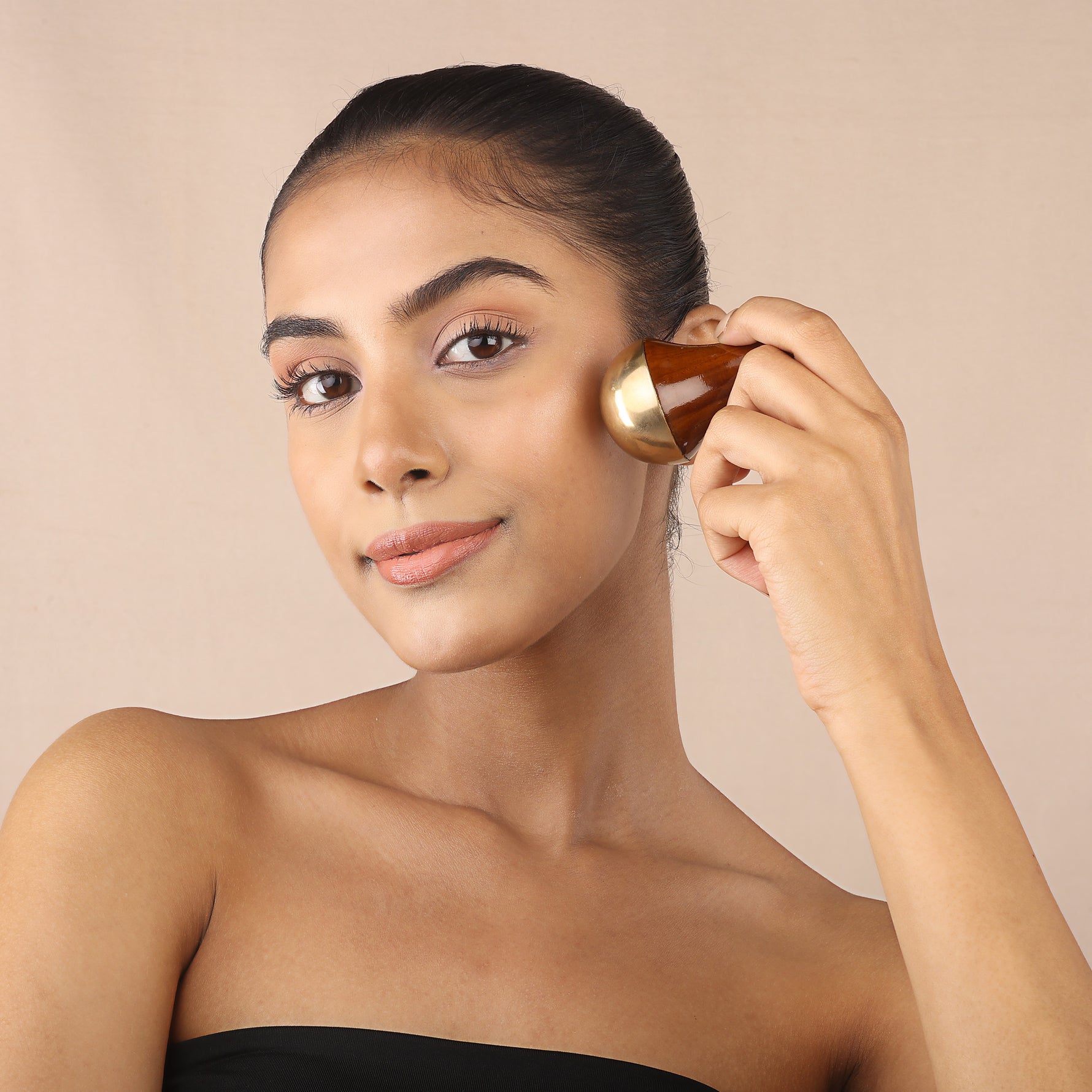
Kansa scalp tools: The Kansa alloy's heat-drawing properties are particularly relevant for Pitta scalp care. A Kansa scalp massager used with cooling oil draws excess heat from the scalp tissue — directly addressing the primary Pitta scalp concern.
Massage technique: Moderate pressure, cooling oil, moderate temperature. Full technique guide here.
Read the full Pitta Dosha guide
Kapha Hair Type: Thick, Dense, Naturally Oily
Kapha's qualities — heavy, moist, dense, stable — produce the hair type that is structurally the most robust and, in balance, the most lush. The challenge of Kapha hair comes from accumulation of Kapha's density and moisture in the scalp.
Characteristics of Kapha hair:
- Thick, dense and naturally heavy — Kapha hair is the most structurally substantial of the three types
- Naturally well-moisturised, sometimes to the point of oiliness at the scalp
- Strong, slow-growing — Kapha's patient, dense quality means the hair grows consistently but slowly
- Prone to scalp oiliness and, when Kapha accumulates, to congestion at the follicle level
- Less prone to breakage and brittleness than Vata, less prone to sensitivity than Pitta
- Hair that can become limp or flat when Kapha is elevated — the weight of excess Kapha expressed in the hair's texture
What typically goes wrong with Kapha hair: The Kapha scalp accumulates — excess oil, congestion at the follicle, and over time a heaviness in the hair that diminishes the natural lustre. Kapha types may notice that their hair becomes progressively oilier as the day progresses, that the scalp feels congested or itchy without clear inflammation, and that the hair lacks the lift and vibrancy it has when Kapha is in balance.
The Ayurvedic approach for Kapha hair:
Oil — stimulating the scalp: Yes, Kapha hair still benefits from regular scalp oiling — but with a very different intention than Vata or Pitta. For Kapha, the goal of oiling is stimulation and invigoration of the follicle, not nourishment and moisture. Lighter oils in smaller quantities, applied with vigorous technique.
Classical herbs for Kapha hair: Stimulating, invigorating herbs are appropriate for Kapha. Ginger and black pepper in hair formulas warm and stimulate the scalp circulation. Rosemary (in modern classical synthesis) and classical Ayurvedic warming herbs support the circulation that Kapha's sluggish nature needs. Lighter sesame or mustard oil as the base rather than coconut.
Washing: More frequent than Vata — every day or every other day suits most Kapha types, preventing excess scalp oil accumulation. Warm (not hot) water. A gently stimulating cleanser — slightly more active than the very gentle cleansers suited to Vata and Pitta.
Massage technique: The most vigorous of the three types. Brisk, stimulating strokes over the entire scalp — the goal is to increase scalp circulation and prevent the stagnation that is Kapha's primary scalp vulnerability. Full technique guide here.
Kansa scalp tools: The physical stimulation of a Kansa scalp massager suits Kapha well — the vigorous contact increases circulation and provides the invigoration the Kapha scalp needs.
Read the full Kapha Dosha guide
Seasonal Adaptation for Hair Care
Hair and scalp respond to the seasons as clearly as the skin. The seasonal adaptation follows the same logic as all other Dosha-seasonal practice:
Autumn and winter (Vata season): Increase oiling frequency and warmth for all types. Vata types should be most vigilant about not allowing the scalp to become dry. Pitta and Kapha types also shift toward slightly richer, more nourishing practice in this season.
Summer (Pitta season): Cooling oil for all types — particularly for Pitta. Reduce heat styling. Protect the scalp from direct sun. Kapha types may find summer a more comfortable season for their hair.
Late winter and spring (Kapha season): Lighter practice for Kapha types. Increased washing frequency if scalp accumulation increases. All types benefit from the stimulating approach during this period.
Read the complete seasonal Dosha balance guide
The Classical Kesh Charya Routine
The complete classical Ayurvedic hair care sequence:
Step 1 — Weekly scalp oil treatment (Kesh Tailam): Apply warm oil, massage thoroughly into the scalp, leave for a minimum of 1 hour or overnight.
Step 2 — Washing with gentle preparation: Warm water, gentle natural cleanser. Frequency adapted to Dosha.
Step 3 — Drying: Air dry where possible — avoid vigorous rubbing with towel, which creates friction and mechanical damage. Pat gently.
Step 4 — Daily light oiling (Nitya Abhyanga): A very small amount of oil to the scalp or at the hairline, as a daily maintenance practice between full treatments. Optional but traditional.
Find Your Hair Type, Starting With Your Dosha
Take our free Dosha test to discover your constitution and receive personalised hair care recommendations. Start here
Browse all Ayurvedic hair care products
Browse all classical hair oils
For a precise hair and scalp protocol — including specific classical oil recommendations, massage frequency and technique for your constitution and current hair condition — our AYUSH-certified Ayurvedic doctors offer personalised online consultations from anywhere in Europe.
Book an online consultation with an AYUSH-certified Ayurvedic doctor
Frequently Asked Questions
Does Ayurvedic hair oiling cause greasiness or weight in the hair? With the right oil for your Dosha in the right quantity, no. Kapha types in particular need to use lighter oils in smaller amounts — heavy oils applied generously do feel greasy for Kapha hair. For Vata types, a slightly richer application leaves hair visibly more nourished rather than greasy.
Are classical Ayurvedic hair oils safe for colour-treated hair? Most classical sesame or coconut-based hair oils do not affect hair colour chemistry. However, some classical formulas with deeply pigmented herbs (notably Bhringaraj and Amalaki, which have darkening properties in some preparations) may be of note for very light-coloured or blonde hair. Patch test before full application.
How is Ayurvedic hair care different from the general Indian hair care advice I have heard? Classical Ayurvedic Kesh Charya is specifically Dosha-adapted — the oil choice, technique, frequency and approach all depend on the constitution. The general Indian tradition of weekly oiling is based on classical Ayurvedic principles, but the classical system is more precise about which oil and method for which person.
Can I follow an Ayurvedic hair care routine if I have very short hair? Yes. The therapeutic target is the scalp, not the hair length. Shiro Abhyanga for those with short or no hair is entirely focused on the scalp and produces the same benefits as for those with longer hair.


