

Anu Thailam: The Classical Ayurvedic Nasya Oil and How to Use It
Of all the daily practices described in the classical Ayurvedic texts, Nasya — the application of oil to the nasal passages — is among the most consistently emphasised and the least commonly practised in the modern West. The Ashtanga Hridayam, in its chapter on Dinacharya (daily routine), lists Nasya alongside tongue scraping, oil pulling and Abhyanga (oil massage) as a foundational morning practice. Where the other practices have gradually found their way into mainstream awareness, Nasya and its classical oil — Anu Thailam — remain largely unknown outside specialist Ayurvedic practice.
This guide covers what Anu Thailam is, why the classical texts prescribe it for daily use, how to apply it correctly and what distinguishes it from other nasal preparations. The Nasya Oil (Anu Thailam) from Art of Vedas follows the classical formulation described in the Ashtanga Hridayam — a multi-herb preparation in a sesame oil and milk base, prepared specifically for the nasal route.
The Classical Prescription: What the Ashtanga Hridayam Actually Says
The Ashtanga Hridayam, Sutrasthana Chapter 22 (Dinacharya), describes the practice of Nasya in the context of the ideal daily morning routine. The text states that nasal application of medicated oil should be performed daily — "Pratimarsha Nasya nityam" — as part of the sequence of practices that maintain the health of the head, sensory organs and upper body structures.
The classical text identifies two primary types of Nasya for the daily context:
Pratimarsha Nasya (daily gentle Nasya): Two drops per nostril, applied with the little finger or from the bottle, suitable for daily practice by any constitution, at any age, as part of the morning routine. This is the context for Anu Thailam in home practice — a gentle, nourishing and protective application rather than a cleansing or therapeutic one.
Marsha Nasya (intensive Nasya): A larger quantity of oil applied in a specific clinical context, part of formal Panchakarma (Ayurvedic detoxification) practice under qualified practitioner supervision. Anu Thailam may be used in Marsha Nasya within a full Panchakarma programme, but this requires professional guidance.
The Charaka Samhita, Sutrasthana Chapter 5, also describes Nasya among the daily practices that protect the health of the head and support the clarity of the sensory organs. The consistent emphasis across multiple classical texts reflects a genuine clinical priority: in classical Ayurvedic anatomy, the nasal passage is understood as the gateway to the head — the route through which medicated preparations can reach and support the structures of the cranial cavity, sensory organs and the channels governing Prana Vata.
Prana Vata: The Classical Rationale for Nasya
To understand why classical Ayurveda emphasises nasal oil application so consistently, it is necessary to understand the concept of Prana Vata (pruh-nah vah-tah) — the sub-type of Vata Dosha that governs the head and sensory reception. The Ashtanga Hridayam describes Prana Vata as residing in the head and moving through the sensory organs, the throat and the chest, governing breath, sensory input, mental receptivity and the downward flow of food and drink.
The nose is described in the classical texts as the "doorway to the head" — the direct channel through which both Prana Vata moves and through which external applications can reach the structures governed by this Vata sub-type. Daily application of a warming, nourishing medicated oil through the nasal route therefore serves a dual function in classical understanding: it directly lubricates and protects the nasal passages themselves, and it introduces the pharmacological properties of the herbs into the channels of Prana Vata — supporting the health of the head, sensory organs, throat and the entire upper body structure governed by this sub-Dosha.
This is the classical rationale that distinguishes Nasya from simply "putting oil in your nose." The nasal route is understood as a direct therapeutic pathway — which is why the classical texts are specific about which oil to use, how much to apply and at what time.
The Classical Composition of Anu Thailam
Anu Thailam is among the more complex classical formulations in the Ayurvedic repertoire. The Ashtanga Hridayam lists the ingredients in detail — a multi-herb preparation in a sesame oil and milk base, with the herbs selected for their combined action on the nasal passages, head structures and Prana Vata channels.
The sesame oil base provides the classical Sukshma (subtle, penetrating) and Snigdha (unctuous) qualities that allow the formulation to move through the fine nasal channels. The milk processing — Ksheerapaka method — transfers cooling and nourishing properties that balance the warming quality of sesame, making the preparation appropriate for daily use across constitutions rather than specifically warming or cooling in character.
Among the primary herbs included in the classical formulation are Devadaru (Cedrus deodara), which provides Tikshna (penetrating) and Vata-Kapha clearing properties in the upper respiratory channels; Yashtimadhu (Glycyrrhiza glabra, licorice root), with classical Madhura rasa and soothing, Pitta-pacifying properties appropriate for the delicate nasal mucosa; Bala (Sida cordifolia), providing the nourishing and Vata-pacifying foundation; and a group of Dashamula herbs (the ten classical roots) that together provide broad Vata-pacifying and channel-opening action across the upper body. Aromatic herbs including Tvak (cinnamon), Ela (cardamom) and Musta (Cyperus rotundus) contribute to the characteristic scent and add their individual pharmacological properties to the formulation.
The resulting preparation has a complex, warm-aromatic character — distinctly different from plain sesame oil, ghee or any single-herb preparation. The classical complexity of the formulation is not incidental: each herb contributes a specific dimension to the combined action on the Prana Vata channels, nasal mucosa and head structures that a simpler preparation could not replicate.
Classical Benefits: What the Texts Describe
The Ashtanga Hridayam lists the following benefits of regular daily Nasya with a classical preparation such as Anu Thailam:
Indriya Prasadana (clarification of the sensory organs): The classical texts describe how regular Nasya supports the clarity of the eyes, ears, nose, throat and sense of taste — all the sensory organs whose channels pass through or near the nasal-cranial region. The classical understanding is that Vata accumulation in these channels dims sensory acuity, and regular nasal lubrication supports their clarity and function.
Svarashuddhi (voice clarity): The throat and vocal structures are directly adjacent to the nasal passages, and the classical texts consistently list voice quality among the benefits of regular Nasya practice. Dryness and Vata aggravation in the upper channels is understood to affect vocal quality — nasal lubrication addresses the root.
Kesha and Shmashrru Vridhi (hair and beard nourishment): The classical texts describe how the oil applied through the nasal route nourishes the scalp and facial hair structures through the internal head channels — a benefit that appears counterintuitive until understood through the classical anatomical framework of Srotas (body channels) connecting the head structures.
Manya Stambha Hara (relief of neck stiffness): Tension and restricted movement in the cervical region are described in the Ashtanga Hridayam as a Vata accumulation presentation in the upper body channels. Regular Pratimarsha Nasya supports the free movement of Prana Vata through these channels, which the classical texts associate with reduced cervical stiffness and tension.
Shirogaurava Hara (relief of heaviness in the head): Kapha accumulation in the head channels — experienced as heaviness, dullness, fogginess or congestion — is directly addressed by the Tikshna (penetrating, cutting) properties of several herbs in Anu Thailam. The classic morning symptom of head heaviness on waking is understood as Kapha accumulation overnight, which regular Nasya helps to clear.
Jatrurddhva Vikara Nashana (prevention of conditions above the collarbone): The Ashtanga Hridayam states this benefit directly — regular nasal Nasya is described as a preventive practice for the range of conditions affecting the head, sensory organs, throat and neck. This is the classical framing of Nasya as a protective daily practice rather than merely a therapeutic one.
How to Perform Pratimarsha Nasya: The Daily Practice
The classical method for daily Pratimarsha Nasya is straightforward and can be integrated into the morning routine alongside tongue scraping and Abhyanga (oil massage). Art of Vedas recommends the following classical approach with the Nasya Oil (Anu Thailam):
Timing: Perform Nasya in the morning after tongue scraping and before eating. The classical texts specify that Nasya should not be performed immediately after eating, bathing, during a fever or during periods of acute illness. Morning is the preferred time as it aligns with the Kapha-dominant phase of the day when head channel accumulation is greatest from the overnight period.
Preparation: Warm the Anu Thailam gently by placing the bottle in warm water for a few minutes. The classical texts consistently emphasise that medicated oil should not be applied cold — warmth improves both the experience and the pharmacological action by increasing the oil's ability to penetrate the fine channels. The Art of Vedas Gokarna Nasya Vessel (small) and the Gokarna Nasya Vessel (large) are classical brass vessels designed specifically for warming and holding Nasya oil — an authentic addition to the practice for those who wish to follow the complete classical method.
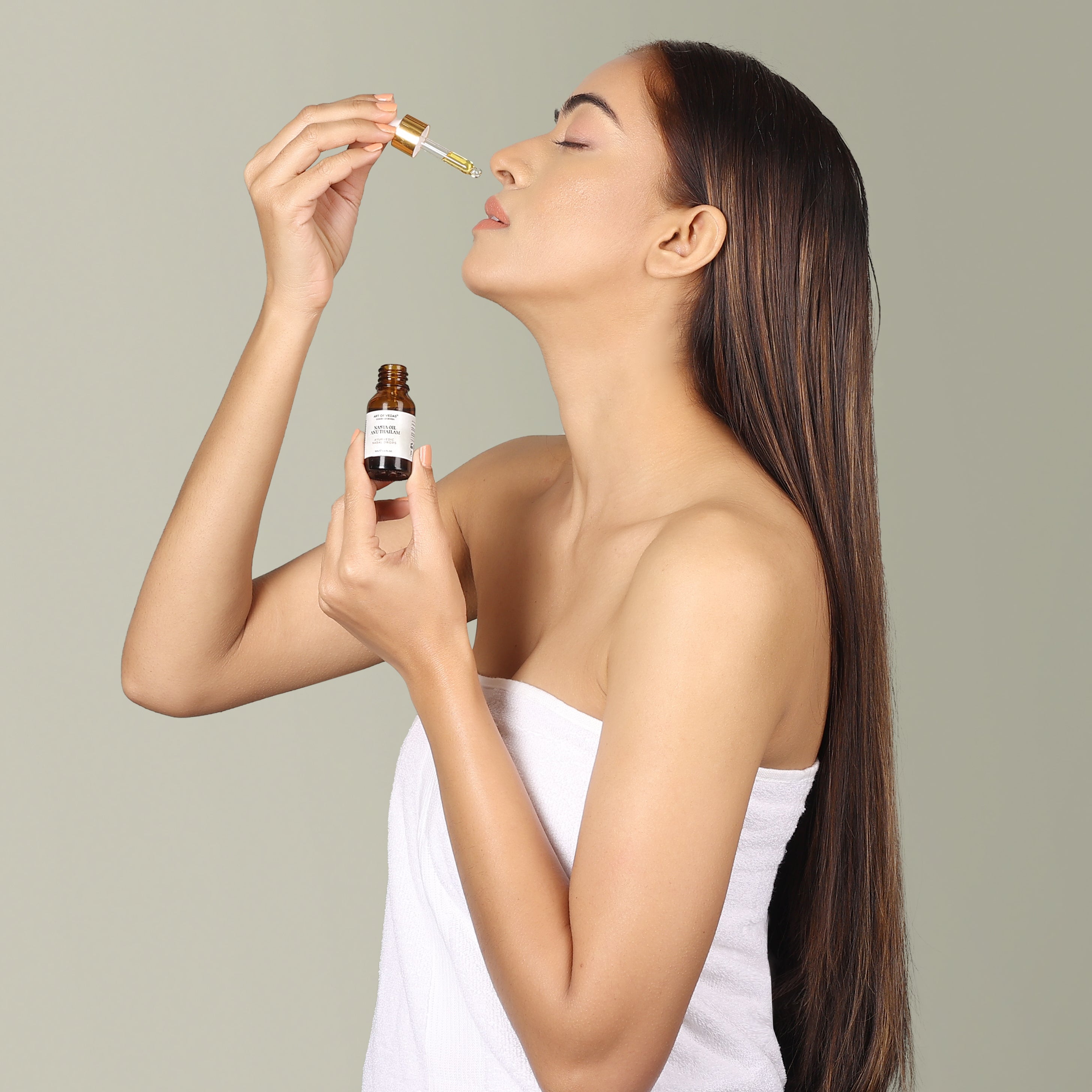
Application: Tilt the head back gently and apply 2 drops of warmed Anu Thailam into each nostril using the dropper. Inhale gently to draw the oil into the nasal passage. Remain with the head tilted for 30 to 60 seconds. Some individuals experience a mild sensation of warmth or a slight post-nasal drip as the oil moves through the nasal channels — this is normal and subsides quickly.
After application: The classical texts advise avoiding cold air, cold water, loud speaking or vigorous exercise immediately after Nasya. Gentle warmth and quiet are recommended for a few minutes after application. These instructions support the classical therapeutic process of the oil penetrating the nasal channels without being immediately disrupted.
Frequency: The Ashtanga Hridayam prescribes Pratimarsha Nasya as a daily practice. For those beginning the practice, starting with 3 to 4 times per week and building to daily is a sensible approach that allows the nasal passages to adjust gradually.
Seasonal Adjustments: When Nasya Becomes Most Important
While the classical texts recommend daily Nasya throughout the year, certain seasonal transitions are identified as particularly important periods for consistent practice. The pre-winter period (Sharad/Hemanta transition) is described as a time when Vata accumulates in the upper body channels as temperatures drop and air becomes drier — regular Anu Thailam application during this period directly supports the nasal mucosa against the drying, Vata-aggravating quality of cold, dry air.
Spring (Vasanta) is identified as a Kapha season when head heaviness and congestion are most common — the Tikshna properties of Anu Thailam's herbs are particularly relevant during this period for supporting clear, open nasal passages and countering the Kapha-accumulating quality of the season. The complete seasonal context for Abhyanga and Nasya practice is addressed in the Art of Vedas Abhyanga guide.
Nasya and the Broader Dinacharya
Nasya does not exist as an isolated practice in the classical texts — it is embedded within the broader Dinacharya (daily routine) that includes tongue scraping, oil pulling (Kavala/Gandusha), Abhyanga (oil body massage), exercise and meditation. When these practices are performed in sequence, each one supports the others: tongue scraping clears overnight Ama (metabolic residue) from the digestive channel, Nasya addresses the head channels, and Abhyanga addresses the body channels — together providing a systematic daily clearing and nourishing of the entire system's channel network.
For those building a classical Ayurvedic morning routine, the recommended integration is: tongue scraping first, then Nasya, then Abhyanga (with the body oil of your Dosha type from the Abhyanga Oils collection or Dosha Massage Oil collection), followed by warm bathing. The complete nasal care range at Art of Vedas is available in the Ayurvedic Nasal Care collection.
Frequently Asked Questions
Is Anu Thailam the same as putting plain sesame oil in the nose?
No. Plain sesame oil does provide basic lubrication to the nasal passages and has some Vata-pacifying benefit, but it lacks the multi-herb pharmacological action of a classical preparation like Anu Thailam. The classical Ashtanga Hridayam prescription specifically describes a prepared medicated oil — not plain carrier oil — for Pratimarsha Nasya. The herbs in Anu Thailam contribute Tikshna properties for Kapha-clearing, Prana Vata channel support and specific benefits for the sensory organs and head structures that plain sesame oil does not provide.
Can I use Anu Thailam if I have nasal congestion or a cold?
The classical texts advise against performing Nasya during fever or acute illness. If you have active nasal congestion, blocked passages or a current cold, it is better to wait until the acute phase has resolved before resuming daily Nasya. Regular practice of Pratimarsha Nasya with Anu Thailam as a preventive daily ritual, continued consistently before the congested season, is the classical approach for supporting nasal passage health through seasonal changes.
How is Nasya different from a nasal spray?
A nasal spray delivers saline or medicated water to the nasal passages for surface-level moisturising or drug delivery. Classical Nasya with a medicated oil like Anu Thailam provides deep lubrication of the nasal mucosa with a complex multi-herb preparation, delivered in a lipid base that penetrates the delicate nasal tissues more fully than water-based preparations. The classical pharmacological purpose is different: not surface moisturising but deep channel lubrication and Prana Vata channel support.
Can Anu Thailam be used by children?
The Ashtanga Hridayam includes Nasya among the practices described for all age groups, with the Pratimarsha (daily gentle) form appropriate from early childhood. For children, one drop per nostril is the classical gentle approach rather than the adult two-drop recommendation. Any nasal preparation for children should be introduced carefully and ideally under the guidance of a qualified Ayurvedic practitioner.
Is there any connection between Nasya and eye health?
Yes — the classical texts consistently list improved vision and eye clarity (Netra Prasadana) among the benefits of regular Nasya practice. The classical anatomical understanding is that the nasal passage and the channels of the eye are connected through the structures of the head, meaning that the oil applied through the nasal route reaches and supports the eye channels through the internal head channel network. This classical connection is described in both the Ashtanga Hridayam and the Charaka Samhita.
What is the brass Nasya vessel used for?
The Gokarna Nasya Vessel is a classical brass vessel traditionally used in Ayurvedic practice to warm and hold the Nasya oil before application. Brass has classical warming and Pitta-moderating properties in the Ayurvedic metal pharmacology, and warming the oil in a brass vessel before Nasya aligns with the classical prescription for warm oil application. The vessel is named after Gokarna — a traditional Ayurvedic nasal care term — and its use connects the daily home practice with the classical clinical Nasya tradition. Art of Vedas offers both a small and large version for different practice contexts.
Anu Thailam is a traditional Ayurvedic medicated oil for nasal use. It is not intended to diagnose, treat, cure or prevent any disease and is not a substitute for professional medical advice. For intensive Nasya procedures beyond daily Pratimarsha practice, consult a qualified Ayurvedic practitioner.


